My Hero My Friend My Mom: Graphics for Crafts
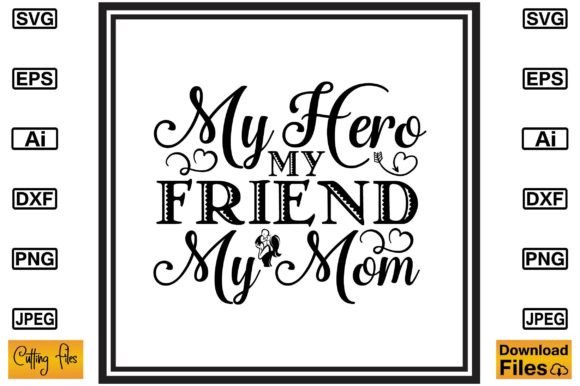
In the fast-paced world of small business branding, finding the right visual elements can make or break a product launch. As a brand designer who has spent years refining identities for local bakeries, boutique skincare lines, and handmade gift shops, I approach every new graphic design asset with a critical eye. Recently, I evaluated the "My Hero My Friend My Mom Free SVG File" not just as a digital download, but as a potential cornerstone for a real-world local business project. Specifically, I imagined using this asset for a limited-edition Parents Day campaign for a artisanal soap and candle brand.
Upon first inspection, the design exudes a warm, sentimental mood that is perfect for businesses targeting family-oriented demographics. The typography and layout suggest a personality that is friendly, approachable, and deeply emotional. It does not scream "corporate" or "luxury minimalist"; rather, it feels handmade, rustic, and authentic. This specific vibe is invaluable for handmade business owners who rely on storytelling to connect with their customers. For a brand selling organic baby products, mother's day gift sets, or personalized home decor, this asset provides an immediate emotional hook that generic stock photography often fails to deliver.
Strategic Applications in Packaging and Identity
The versatility of this file extends far beyond its original intent as a T-shirt cut file. In a professional packaging design context, I see immense potential for integrating this graphic into various touchpoints. For the hypothetical candle brand, this SVG could serve as a hero graphic on a limited-edition box sleeve, instantly communicating the theme of the collection. It works exceptionally well on hang tags attached to gift bundles, adding a personal note that elevates the unboxing experience.
Furthermore, this asset is ideal for creating cohesive marketing visuals. Imagine a florist using this design on window decals during the spring season, or a local coffee shop printing it on paper sleeves for their takeaway cups to celebrate family milestones. The file can be easily adapted for social media graphics, serving as the central image for Instagram stories or Facebook ads promoting a seasonal sale. For product labels, particularly on larger jars or bags, the design offers enough visual weight to stand out on a crowded shelf without overwhelming the essential product information.
When considering logo design or sub-branding, this element could act as a decorative badge for a specific product line within a larger portfolio. For instance, a children's clothing boutique could use this graphic on a specific "Mom & Me" collection, creating a clear visual hierarchy that guides the customer's eye. The ability to scale the vector ensures that whether it is printed on a large poster for a store event or a small sticker included in a shipment, the integrity of the lines remains sharp.
Elevating Brand Presentation and Trust
Integrating high-quality design assets like this one directly impacts how a brand is perceived. A stronger first impression is crucial in retail environments where customers make split-second decisions. By using a well-crafted graphic that resonates emotionally, a business can achieve better product recognition. When a customer sees consistent imagery across a product mockup, a website banner, and a physical flyer, it reinforces a sense of professionalism and reliability.
This consistency leads to improved customer trust. Shoppers are more likely to believe in the quality of a product if the packaging looks polished and thoughtfully designed. The "My Hero My Friend My Mom" graphic adds a layer of sincerity to the brand narrative, fostering a stronger emotional connection. It transforms a simple transaction into a meaningful exchange, which is the holy grail of professional branding. For local businesses competing against big-box retailers, this emotional resonance is often the deciding factor that drives loyalty and repeat purchases.
Ideal Use Cases and Strategic Placement
To maximize the return on investment for this digital product, it is essential to deploy it where it shines brightest. The asset works best as a focal point on packaging accents, such as the lid of a gift box or the center of a circular label. It is highly effective for promotional banners both online and in-store, acting as a visual anchor for seasonal campaigns. Additionally, it serves beautifully as a decorative element on thank-you cards, reinforcing the gratitude a business feels toward its community.
For creative entrepreneurs managing their own web design or editorial design projects, this graphic can break up text-heavy layouts in lookbooks or catalogs. It adds a human touch to digital interfaces, making landing pages feel less sterile. In the realm of printable design, it is perfect for creating DIY party kits or scrapbook pages that customers can purchase as add-ons, expanding the revenue stream of a Crafts-focused shop.
Cautions and Design Limitations
However, a responsible designer must also recognize where this asset should be used carefully. Its sentimental and somewhat playful nature makes it unsuitable for formal corporate branding or industries requiring a stark, serious tone, such as legal services or high-end luxury cosmetics that rely on extreme minimalism. One must avoid placing this graphic on very small labels where the intricate details might get lost or muddy during the printing process.
It is also crucial to ensure the decoration does not compete with important text, such as ingredient lists, safety warnings, or pricing information. On crowded product packaging, adding this element could create visual clutter, disrupting the visual hierarchy. Furthermore, designers should be cautious when placing it on low-contrast backgrounds; if the SVG is black, it needs a light background to remain legible. Using it in areas dedicated strictly to legal information is a definite no-go, as it could undermine the seriousness of the compliance data.
Practical Notes for the Professional Designer
Before committing this asset to a client project or a physical product run, there are several practical steps to take. First, always test the design on real product mockups to see how it interacts with the texture of the material, whether it is kraft paper, glossy plastic, or fabric. Check the black and white usage to ensure it holds up without color, which is vital for cost-effective printing methods like thermal labeling.
Preview the graphic on small labels to confirm readability at scale. Test it with your specific brand colors to ensure harmony; sometimes a pre-made SVG needs color adjustment to fit a specific palette. Compare it with competitor packaging to ensure your brand stands out rather than blends in. If you are working with a Canva template or other design software, inspect the SVG or vector editability to confirm you can manipulate nodes if necessary.
Typography pairing is another critical consideration. Experiment with placing the graphic beside serif fonts for a classic look, sans serif fonts for modernity, or script and handwritten fonts to enhance the personal feel. Finally, and most importantly, review the licensing terms. While many files are free for personal use, commercial design projects involving physical product sales often require a commercial license. Always confirm you have the rights to use the asset for client work or merchandise to avoid legal pitfalls. By treating this clipart or illustration with the same rigor as a custom-drawn logo, you ensure that your final output is not just cute, but commercially viable and brand-enhancing.